 Save
Save I discovered schnitzel not in a fancy restaurant, but standing in my aunt's tiny kitchen in Bavaria, watching her pound chicken breasts with such confident force that I jumped. She was moving fast, humming something old, and kept telling me the thinner the meat, the faster it cooks—fewer chances to dry it out. That lesson stuck with me, and now whenever I make this dish, I hear her voice reminding me to be patient with the pounding.
There was an afternoon when I cooked this for my partner's parents on short notice, and I remember feeling nervous because schnitzel felt too simple, too ordinary for impressing people. But watching them close their eyes after the first bite, hearing them ask for seconds before they finished their first piece—that's when I realized simplicity done right is actually the most impressive thing you can put on a table.
Ingredients
- Pork chops or chicken breasts (4 pieces, about 150 g each): Boneless cuts work best because you're working with the meat directly; look for pieces that are fairly uniform in thickness so they cook evenly, and don't skip the pounding step—it matters more than you'd think.
- All-purpose flour (100 g): This is your first layer of protection, creating a surface for the egg to grip onto; some cooks add a pinch of paprika here for color, but traditional schnitzel keeps it simple.
- Eggs (2 large) and milk (2 tbsp): The milk loosens the beaten eggs just enough so they coat the meat in a thin, even layer rather than clumping up; this is the glue that holds everything together.
- Fine dry breadcrumbs (150 g): Don't use panko unless you like a chunkier crust; fine breadcrumbs give you that traditional delicate, shattering crispness that makes schnitzel special.
- Vegetable oil or clarified butter (120 ml): Clarified butter—Butterschmalz—is the traditional choice and gives a flavor you can't get from oil, but vegetable oil works fine if that's what you have on hand.
- Salt, black pepper, lemon wedges, and parsley: The lemon is essential, not optional; squeeze it over the schnitzel just before eating because it brightens everything and cuts through the richness of the fried coating.
Tired of Takeout? 🥡
Get 10 meals you can make faster than delivery arrives. Seriously.
One email. No spam. Unsubscribe anytime.
Instructions
- Pound the meat until it's thin and even:
- Place each cutlet between two sheets of plastic wrap and use a meat mallet or rolling pin to pound until about 1/4 inch thick. Use steady, confident strokes rather than wild whacking—you're trying to break down the muscle fibers, not destroy the meat.
- Season generously:
- Sprinkle salt and pepper on both sides, making sure you season the edges too because they'll be the first thing your teeth hit.
- Set up your breading station:
- Arrange three shallow plates or bowls in a row: flour on the left, beaten eggs mixed with milk in the middle, breadcrumbs on the right. This assembly-line approach keeps your hands from getting too messy.
- Bread each cutlet with care:
- Coat the meat in flour first, shake off the excess so it's not clumpy, then dip into the egg mixture, and finally press gently into the breadcrumbs. The key word is gently—press just enough so the crumbs stick, not so hard that you compress them and lose the texture.
- Heat your oil until it's ready:
- Pour the oil into a large skillet and turn the heat to medium-high; wait a minute or so until it's hot enough that a tiny piece of bread dropped in sizzles immediately. If you fry in oil that's not hot enough, the meat will absorb it instead of frying crispy.
- Fry until golden and cooked through:
- Add the cutlets to the hot oil (work in batches so they don't crowd the pan) and fry for 2–3 minutes per side until the coating is deep golden brown and the meat is cooked through. You'll know it's done when the thickest part is opaque and firm when poked.
- Drain and rest briefly:
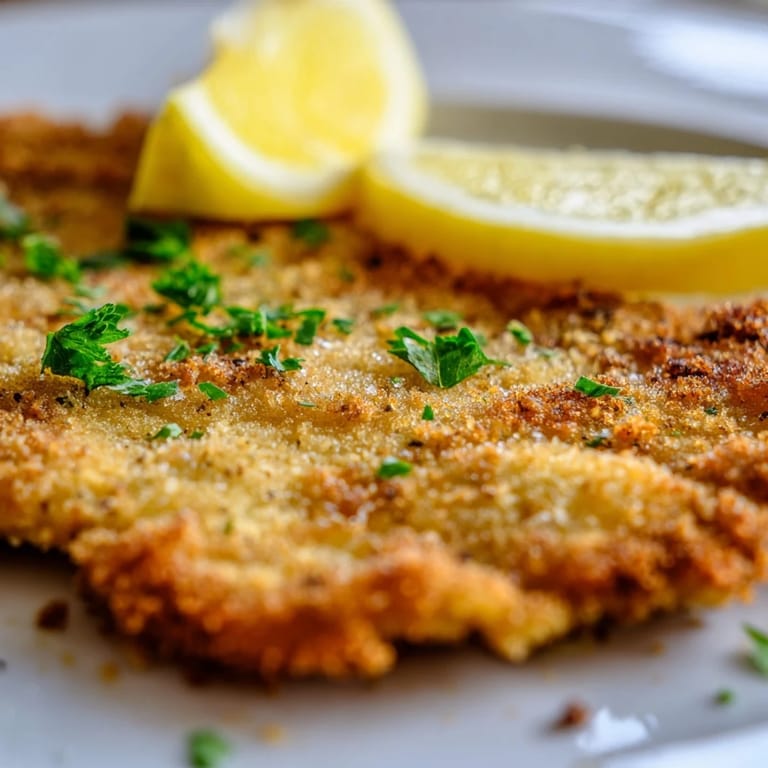
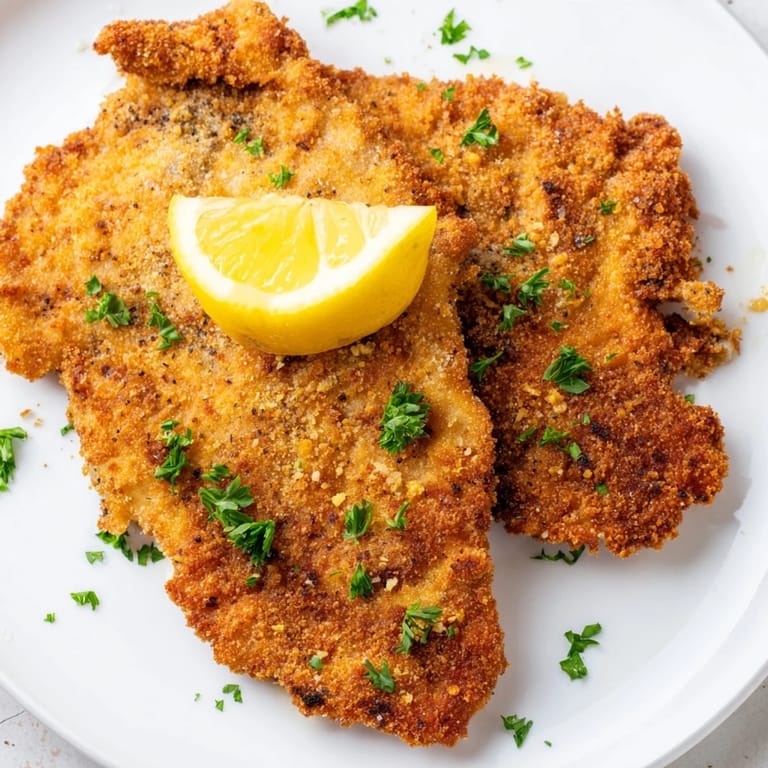
- Transfer the finished schnitzels to a paper towel-lined plate for just a minute to drain excess oil, then serve immediately with lemon wedges and fresh parsley.
 Save
Save I remember my neighbor stopping by just as I was serving this, and I almost didn't invite her in out of habit. But I made an extra plate on impulse, and she sat at my kitchen table eating schnitzel and telling me about her childhood in Vienna, how her mother made it every Sunday. That meal turned into a friendship, all because I decided to be a little braver about sharing food.
The Art of Thin, Even Meat
The pounding step is where schnitzel begins to become schnitzel. Your goal isn't aggression—it's patient, even pressure that transforms a thick, tough piece of protein into something that will cook in minutes and stay tender all the way through. I used to think I was wasting effort, but the difference between meat that's been carefully pounded and meat that hasn't is the difference between this dish tasting like a delicate, crispy cloud and tasting like a tough, rubbery circle. Once you feel how much softer the meat becomes after pounding, you'll never rush this step again.
Building Layers of Flavor
The three-step breading process—flour, egg, breadcrumbs—isn't just tradition; it's a lesson in structure that applies to a lot of cooking. The flour creates grip for the egg, and the egg acts as glue for the breadcrumbs. Skip any step or rush through it, and the whole thing falls apart in the pan. I learned this the hard way once when I tried to combine the flour and egg mixture to save time, and the result was a patchy, uneven coating that looked sad and tasted mediocre. That single mistake taught me why the old recipes do things the way they do.
Serving and Side Dishes
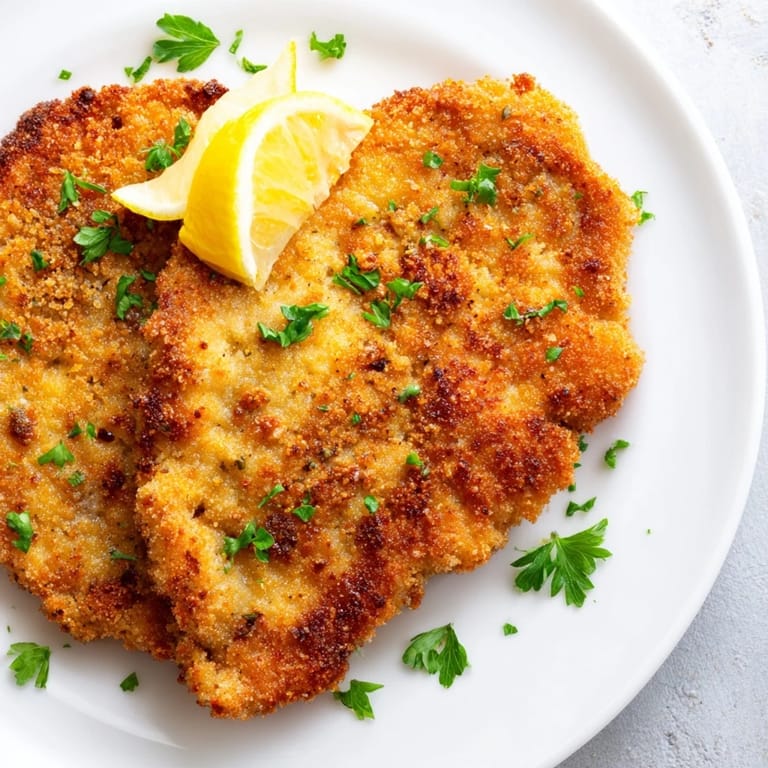
Schnitzel tastes best served immediately while the crust is still cracking under your fork, but it's forgiving enough to sit for 10 minutes if your guests are running late. Traditionally, you'd serve this with warm potato salad dressed in a vinegar-based sauce, crisp cucumber salad, or a pile of fries. The lemon wedge is non-negotiable—squeeze it fresh onto the meat just before you eat, and you'll understand why it's been paired with schnitzel for centuries.
- A simple green salad with a mustardy vinaigrette cuts through the richness beautifully.
- If you're in a hurry, even bread and butter alongside schnitzel feels complete.
- Serve with a cold beer or a dry Riesling, and you've captured something essential about how Germans eat.
 Save
Save Schnitzel is proof that cooking doesn't need to be complicated to be memorable. Make it once, and it becomes a dish you return to again and again.
Common Questions
- → What type of meat works best for schnitzel cutlets?
Boneless pork chops or chicken breasts pounded thin are ideal for tender, even cooking.
- → How can I achieve a crispy coating on the cutlets?
Coat meat with flour, then egg washed with milk, and finish with fine dry breadcrumbs. Fry in hot oil or clarified butter without pressing the crumbs too firmly.
- → What oil is recommended for frying?
Vegetable oil or clarified butter (Butterschmalz) provides a flavorful and high-heat safe frying medium.
- → How do I keep the cutlets from becoming greasy?
Drain fried cutlets on paper towels to absorb excess oil before serving.
- → What side dishes complement this cutlet?
Serve with lemon wedges and traditional sides like potato salad, cucumber salad, or fries for a balanced meal.
- → Can the cutlet be made with veal instead?
Yes, substituting veal creates a traditional Wiener-style schnitzel with authentic flavor.