 Save
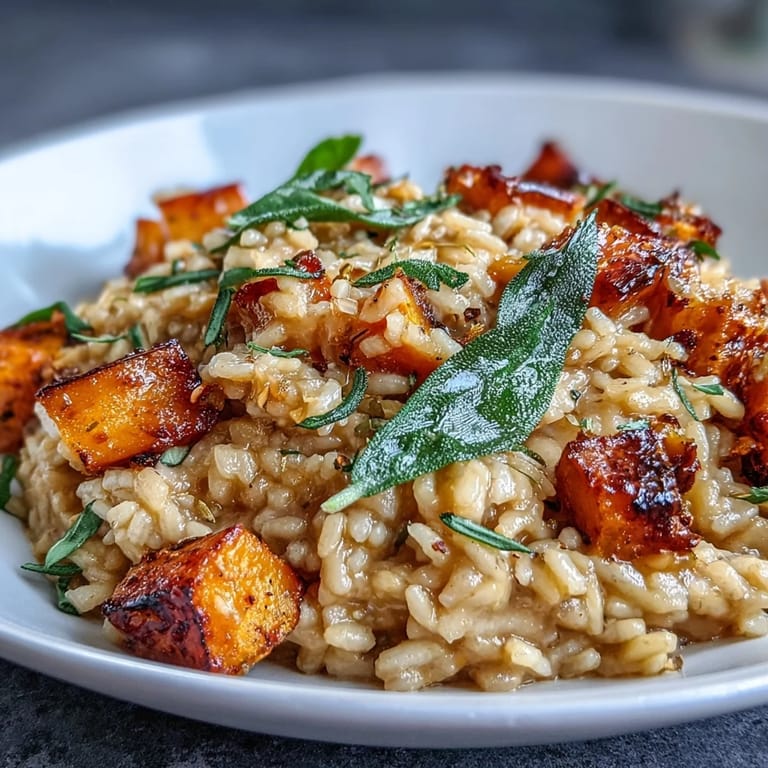
Save There's something about October evenings that makes me crave risotto, and one year I decided to stop defaulting to mushroom and actually lean into the season with pumpkin instead. My kitchen filled with that nutty roasted aroma while the rice was still stirring itself into submission, and I remember thinking how ridiculous it seemed that something so comforting could technically be vegan. The first spoonful proved me wrong about my own skepticism—creamy, naturally sweet, with crispy sage leaves that tasted like autumn had a specific flavor.
I made this for a friend who'd just gone vegan and was convinced she'd be eating sad salads forever, so I wanted something that felt indulgent and real. Watching her face when she tasted it, expecting compromise and getting pure comfort instead—that's when I knew this recipe had to stay in rotation.
Ingredients
- Pumpkin (1 small, about 600 g): The sweetness here does the heavy lifting that cream usually does, so don't skip roasting it first or you'll end up with watery risotto and regrets.
- Arborio rice (300 g or 1 ½ cups): This starchy short grain is non-negotiable—it's what creates that signature creamy texture when you stir it properly.
- Vegetable broth (1.2 liters or 5 cups): Keep it warm in a separate pot; adding cold broth will shock your rice and ruin the creamy vibe.
- Dry white wine (120 ml or ½ cup): Optional but worth it—the acidity brightens everything and adds depth you can't fake.
- Yellow onion (1 medium): Chop it fine so it melts into the background and creates a sweet foundation instead of poking through with chunks.
- Garlic (2 cloves): Mince it small and don't let it brown, or you'll taste bitterness instead of the gentle warmth you want.
- Olive oil (3 tbsp, divided): Use a good quality one if you can—it's tasted directly here, not hidden behind other flavors.
- Fresh sage (15–20 leaves): These get fried separately until they shatter; dried sage won't give you that crispy texture or the flavor punch.
- Nutmeg (½ tsp freshly grated): Grate it yourself from a whole nutmeg if possible, because pre-ground loses its warmth and smells like old spice cabinets.
- Nutritional yeast (2 tbsp): This adds a savory umami note that mimics cheese without the pretense, though you can skip it if you want.
- Lemon zest (½ lemon): A final brightness that cuts through richness and reminds your palate what citrus tastes like after all that warmth.
Tired of Takeout? 🥡
Get 10 meals you can make faster than delivery arrives. Seriously.
One email. No spam. Unsubscribe anytime.
Instructions
- Roast your pumpkin first:
- Preheat the oven to 200°C (390°F) and spread your diced pumpkin on a baking tray, drizzle with 1 tbsp olive oil, and season with salt and pepper. Roast for 20–25 minutes until the edges are golden and a fork goes through easily—this sweetness is what makes the dish work.
- Build your aromatics:
- Heat 1 tbsp olive oil in a large, deep skillet over medium heat and add your finely chopped onion, letting it turn translucent and soft over 3–4 minutes. Stir in the minced garlic for just 1 more minute—you want fragrance, not browning.
- Toast the rice:
- Add the arborio rice and stir constantly for 2 minutes so each grain gets coated in oil and starts to turn slightly translucent at the edges. You'll hear a faint clicking sound as the grains move around, which means you're doing it right.
- Add wine if you're using it:
- Pour in the white wine and stir until it's almost completely absorbed, which takes about 2–3 minutes and fills your kitchen with an aroma that makes you feel like you know what you're doing.
- Stir in the broth, one ladleful at a time:
- This is the meditative part where you can't walk away—add the warm broth slowly, stirring frequently, and wait until each addition is mostly absorbed before adding the next. Keep going for about 18–20 minutes until the rice is creamy and tender but still has a tiny bit of firmness when you bite it.
- Fry your sage while the rice finishes:
- In a small skillet, heat the remaining 1 tbsp olive oil over medium-high heat and carefully add your sage leaves, watching them turn crispy and dark in about 30–60 seconds. Transfer them immediately to a paper towel so they don't get soggy.
- Finish with pumpkin and warmth:
- When the rice is nearly done, gently fold in your roasted pumpkin, the nutmeg, and nutritional yeast if you're using it. Taste and adjust the salt and pepper—this is your last chance to balance the flavors.
- Serve while everything is hot:
- Divide the risotto into bowls and top generously with those crispy sage leaves and lemon zest if you want that final brightness.
 Save
Save I served this to my family on a Sunday evening when everyone was tired and skeptical, and somehow it turned into one of those meals where people ask for seconds and then thirds. There's something about a plate of food that makes you feel simultaneously nourished and celebrated that stays with you.
Why This Works Without Cheese
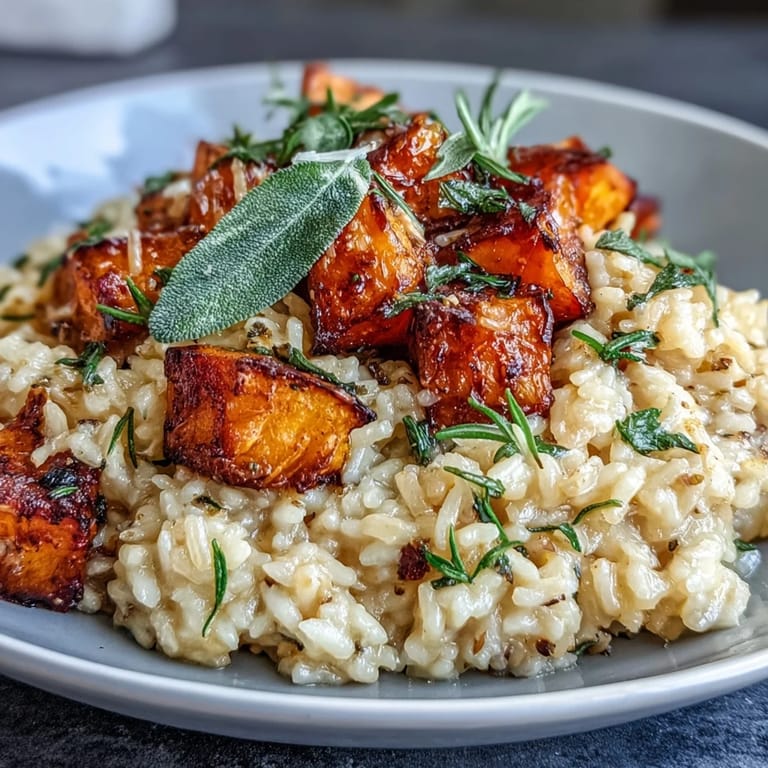
The roasted pumpkin is naturally sweet and starchy enough that when you fold it in near the end, it creates the exact same creamy texture you'd get from Parmesan or cream, except it tastes like autumn instead of dairy. The arborio rice releases its starches as you stir, which is what actually creates the creaminess—cheese just adds flavor and richness, but pumpkin does both. That nutritional yeast is there as backup if you want a savory note, but honestly the sage leaves handle most of the umami work.
Making It Ahead and Reheating
I've reheated risotto the next day by adding a splash of warm broth and stirring gently over low heat until it loosens up again, which takes about 5 minutes instead of the original 20. It won't taste quite as silky as fresh risotto because the starches have already set, but it's still delicious and honestly feels like an acceptable shortcut when you're in a rush. The crispy sage should absolutely be made fresh right before serving, so save that step for the moment you're plating.
Variations and Swaps
Butternut squash works perfectly if you prefer something slightly less sweet, and the cooking time stays the same since you're roasting it first anyway. Some people blend half the roasted pumpkin before folding it in, which makes the risotto even creamier and more pumpkin-forward—I've done it both ways and both versions are good, just different. You can also add crispy chickpeas or toasted pumpkin seeds on top if you want extra texture and protein, which transforms this from a side dish into something hearty enough for a full meal.
- Swap dry white wine for vegetable broth if you don't have wine on hand, though you'll lose that bright acidity.
- Toast your sage in a separate pan instead of adding it raw so you get maximum crispiness and flavor concentration.
- Taste constantly in the last few minutes of cooking because risotto's creaminess depends on getting that texture exactly right.
 Save
Save This risotto sits at that perfect intersection of impressive and accessible, which means you can make it on a Tuesday night for yourself or pull it out for company and feel genuinely proud. It's the kind of dish that proves vegan cooking isn't about compromise—it's just cooking that happens to be thoughtful.
Common Questions
- → Can I use a different type of rice instead of arborio?
Arborio rice is essential for achieving the signature creamy texture due to its high starch content. Carnaroli or vialone nano rice work as substitutes, but long-grain varieties won't produce the same result.
- → How do I know when the risotto is properly cooked?
The rice should be tender yet firm to the bite (al dente) with a creamy, flowing consistency. It should slowly spread on the plate when served, not be stiff or soupy.
- → Can I make this dish without wine?
Yes, simply skip the wine step and proceed directly to adding the vegetable broth. The dish will still be delicious, though wine adds a subtle depth of flavor.
- → How can I store and reheat leftover risotto?
Store in an airtight container in the refrigerator for up to 3 days. Reheat gently on the stovetop with additional vegetable broth to restore creaminess, stirring frequently.
- → What can I substitute for nutritional yeast?
While nutritional yeast adds a cheesy umami flavor, you can omit it or use a small amount of miso paste dissolved in broth for similar depth. Vegan parmesan also works well.
- → Can I prepare components ahead of time?
You can roast the pumpkin and prepare the crispy sage up to a day in advance. However, the risotto itself is best cooked fresh to maintain its creamy texture.