 Save
Save The first time I arranged a grazing board that actually made people stop talking, I realized I'd been thinking about it all wrong. It wasn't about fitting everything neatly onto a surface—it was about creating theater, about letting ingredients tumble and flow like they couldn't be contained. That night, watching someone reach for a wedge of brie that dangled just over the edge, I understood the magic wasn't in the ingredients themselves, but in how they told a story of abundance and drama together.
I made this board for a dinner party during the kind of week where everything felt too hectic to cook. My friend Elena walked in, and before I could even offer her a drink, she was already reaching across the table with both hands, her eyes lighting up at the way the prosciutto draped like silk ribbons. That's when I realized: the best dishes are the ones that let your guests feel like they're part of something special, something a little bit more beautiful than ordinary.
Ingredients
- Brie, 150g sliced into wedges: The soft, creamy anchor that makes everything feel luxurious; let it sit out for ten minutes before serving so it spreads like butter.
- Aged Cheddar, 150g cut into sticks: A sharp contrast that keeps the board from feeling one-note; the crystalline texture catches light beautifully when positioned standing up.
- Blue Cheese, 120g broken into chunks: This is your secret weapon for depth; crumble it roughly rather than cutting it precisely, which looks more inviting.
- Prosciutto, 100g loosely draped: Don't smooth it down—let it bunch and fold naturally, as though it's fallen into place by accident.
- Soppressata, 100g folded: A saltier counterpoint that keeps guests reaching back for more cheese; fold each slice only once or twice for movement and texture.
- Red Grapes, 1 cup on the stem: Keep them in small clusters on the stem; they're easier to grab and look more intentional than scattered singles.
- Fresh Figs, 1 cup halved: Cut them just before serving so they don't oxidize; the jewel-like interior is part of the board's visual drama.
- Strawberries, 1 cup halved: Choose firm ones that won't weep into the board; the red plays against the golds and purples beautifully.
- Pomegranate seeds, 1 cup: These are your garnish jewels—scatter them last, where they catch the light and add surprise pops of color and tartness.
- Baguette, 1 sliced: Slice it thin and angle the pieces so they fan slightly; they're less about eating and more about creating visual rhythm.
- Seeded Crackers, 150g: Choose sturdy ones that won't crumble under the weight of cheese; they're the structure that lets people build their own bites.
- Fig Jam, 1/2 cup: Spoon it into a small bowl so it sits proud on the board; the glossy surface reflects light like a garnish itself.
- Honey, 1/4 cup: Drizzle some over the brie wedges while they're positioned, letting it pool slightly in the creases.
- Marcona Almonds, 1/2 cup: These Spanish almonds are buttery and mild; scatter them in a small pile where they catch attention without overwhelming.
- Olives, 1/2 cup pitted and mixed: The brine adds necessary saltiness that balances the sweetness of fruit and jam; nestle them in a shallow bowl to prevent rolling.
- Fresh herbs like rosemary and thyme: Use them as both flavor and garnish; tuck sprigs between ingredients so they guide the eye across the board.
Tired of Takeout? 🥡
Get 10 meals you can make faster than delivery arrives. Seriously.
One email. No spam. Unsubscribe anytime.
Instructions
- Choose Your Stage:
- Select a large wooden or marble board and position it near the table's edge, slightly overhanging so ingredients can cascade dramatically downward. This positioning is essential to the whole theatrical effect, so don't be timid about letting it sit proud on the surface.
- Layer Your Cheeses with Intention:
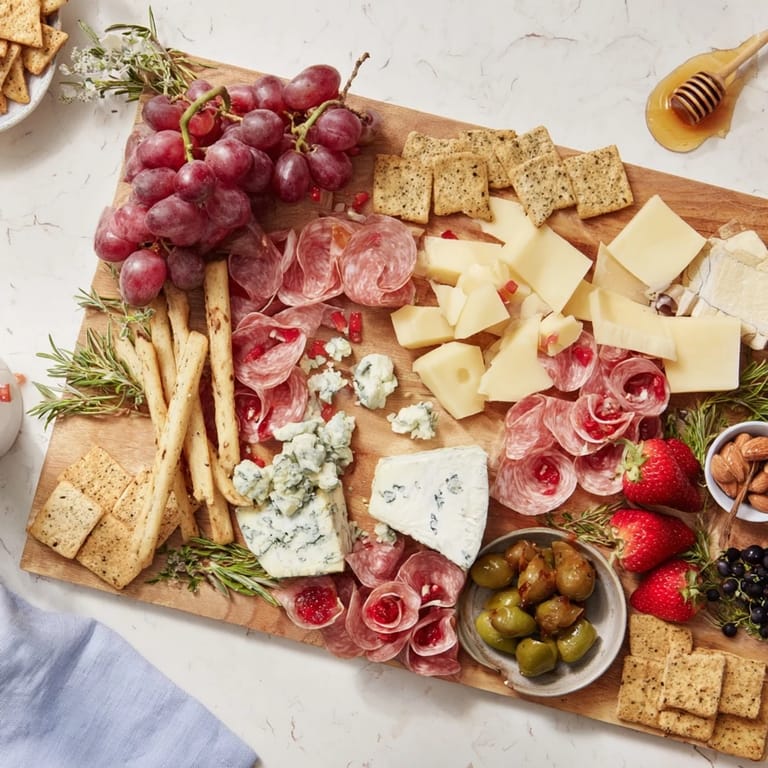
- Arrange brie wedges, cheddar sticks, and blue cheese chunks so some pieces spill over the board's edge like velvet curtains falling offstage. Position the softer brie where it looks like it's naturally sliding, and stand cheddar sticks upright so they catch light and create height.
- Drape the Charcuterie Like Fabric:
- Fold prosciutto and soppressata loosely so they bunch and layer, creating shadows and movement. Let the meat fall over the edge in waves—this is where the theatrical magic happens, where textures become visual drama.
- Scatter Fruits for Color and Flow:
- Tuck grapes still on their stems, halved figs, halved strawberries, and pomegranate seeds throughout the board, allowing some to trail over the edge. The fruit should feel like it's gently tumbling rather than carefully placed, so resist the urge to make everything symmetrical.
- Angle Your Breads and Crackers:
- Fan baguette slices and seeded crackers alongside the cheeses, letting them lean and slightly overhang the board's edges. This creates a foundation for guests to build bites while maintaining the cascading aesthetic.
- Nestle the Condiments:
- Place small bowls of fig jam, honey, olives, and almonds directly on the board among the other ingredients rather than around the edges. This makes them feel integrated into the composition, not afterthoughts.
- Add the Final Flourish:
- Tuck fresh rosemary and thyme sprigs between ingredients, letting them weave through the composition. These herbs ground the drama in something real and edible.
- Serve with Theater:
- Bring the board to the table and step back—let your guests take in the full visual impact before they begin grazing. The moment of pause before the first reach is part of the experience.
 Save
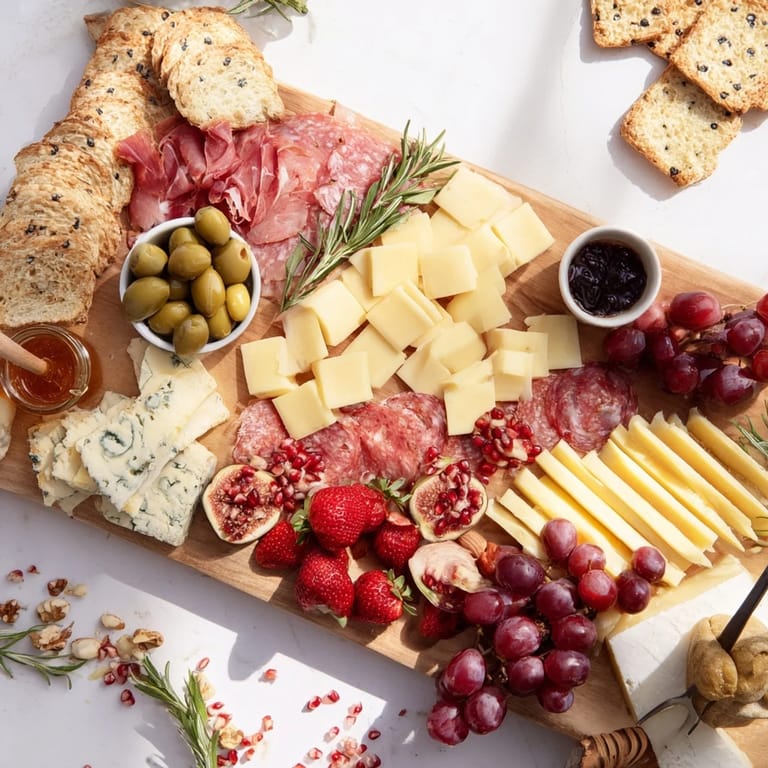
Save What struck me most wasn't the compliments on the food, but the way people lingered around this board. They weren't just eating; they were having conversations they wouldn't have had otherwise, reaching across each other, discovering flavor combinations by accident. That's when I realized grazing boards aren't really about the ingredients—they're about creating a moment where people slow down and connect.
The Art of Cascading
The whole point of this board is the cascade, and that requires a different mindset than traditional plating. Instead of thinking about balance and symmetry, think about gravity and movement. Let ingredients want to fall; let them bunch and fold. Position heavier items like cheese and charcuterie closer to the table edge, then let fruits and herbs tumble over naturally. The asymmetry is what makes it feel alive and theatrical rather than like something assembled by committee.
Building the Perfect Bite
The genius of a grazing board is that everyone creates their own perfect combination. Someone might pair brie with fig jam and a crisp cracker, while someone else goes for blue cheese with pomegranate and an almond. The board is just the suggestion; your guests write the actual recipe. Positioning different elements near each other—the jam close to the brie, the honey where it can drip onto cheese—helps guide these discoveries without feeling prescriptive.
Timing and Seasonality
Fresh figs are the heartbeat of this particular board, which means it sings best in late summer and early fall when figs are actually at their peak. But that said, don't let seasonality stop you; substitute what's brilliant right now in your market. Ripe stone fruits in summer, pomegranate and persimmons in winter, berries in spring—let the season dictate which fruits cascade across your board.
- Check your cheeses the day before and choose ones at their peak ripeness; soft cheeses that smell funky won't improve with time.
- If fresh figs aren't available, dried figs work beautifully and actually last longer on the board without browning.
- Taste everything before assembling, especially the olives and charcuterie, so you know the flavor balance is working.
 Save
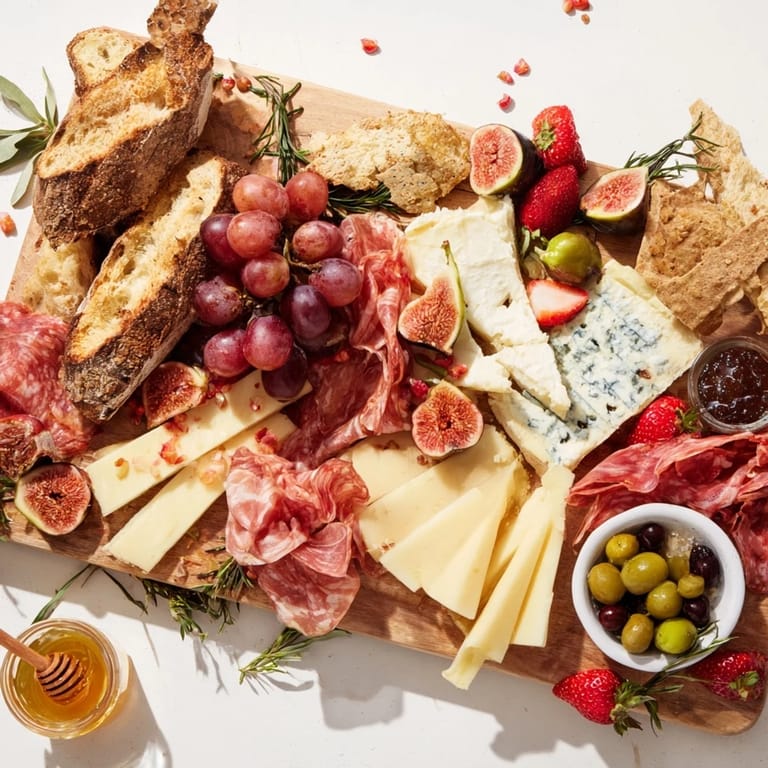
Save Every time I make this board now, I think about that moment when Elena's face lit up, when the whole table suddenly felt like a celebration. That's the real magic here—not the individual ingredients, but the experience of abundance and beauty made casual, as if the best things just naturally overflow when you gather people around.
Common Questions
- → What cheeses work best on the board?
Brie, aged Cheddar, and Blue Cheese provide a balanced mix of creamy, sharp, and tangy flavors that complement fresh fruits and charcuterie well.
- → How can I make this suitable for vegetarians?
Simply omit the prosciutto and soppressata. The board still shines with cheeses, fruits, nuts, and breads for a satisfying bite.
- → What breads and crackers should I include?
Sliced baguette and seeded crackers offer great texture contrasts and pair wonderfully with cheeses and toppings.
- → How do I achieve the dramatic cascading presentation?
Arrange cheeses and charcuterie so they spill over the edge of the board, with fruits and breads trailing alongside for flowing visual appeal.
- → Which condiments best complement the flavors?
Fig jam and honey add sweetness, while olives and Marcona almonds contribute savory and crunchy notes, enhancing overall taste.
- → Can this be prepared ahead of time?
Assemble just before serving to maintain freshness and visual impact, especially when using delicate fresh fruits and herbs.