 Save
Save My grandmother kept dried cod hanging in her pantry like precious treasure, waiting for December to arrive. She'd soak it for nearly a week, checking it daily with the ritual of someone who understood that transformation takes time. When I finally watched her pull that fish from the oven—golden, flaking apart at the gentlest touch—I understood why this humble ingredient had survived centuries of Norwegian winters. The mustard sauce she made was silky and bold, a counterpoint to the delicate fish that seemed almost too simple until you tasted how perfectly they belonged together.
I made this for friends who'd never had lutefisk before, and I watched their faces shift from skepticism to genuine surprise. One friend kept asking about the sauce recipe, convinced I'd added something mysterious—it was just butter, flour, milk, and mustard, but somehow those simple things had become magic. We sat around the table with aquavit glasses clinking, and someone said it tasted like comfort, like belonging, and I realized that's exactly what it is.
Ingredients
- Dried cod (lutefisk): This is the heart of the dish—buy from a Scandinavian grocer if possible, as the quality varies wildly. One kilogram feeds four people generously.
- Cold water for soaking: Use filtered water if your tap water is heavily chlorinated; it can interfere with the delicate flavor transformation.
- Coarse salt: This final salt treatment before baking draws out excess moisture and seasons the fish from within.
- Unsalted butter: Three tablespoons total gives the sauce richness without overwhelming the mustard.
- All-purpose flour: The classic choice, though gluten-free flour works beautifully if needed—use the same measure.
- Whole milk: 300 ml creates a sauce that's creamy but not heavy; don't substitute with cream or it becomes too rich.
- Dijon mustard: The smooth, refined backbone of the sauce.
- Whole-grain mustard: This adds texture and a subtle nuttiness that regular mustard can't provide.
- Sugar: Just a teaspoon—it rounds out the mustard's sharpness without making anything sweet.
- White pepper: Milder than black pepper, it doesn't announce itself but keeps everything elegant.
- Boiled potatoes: Waxy potatoes hold their shape better than floury ones and don't absorb the sauce too quickly.
- Crispbread or flatbread: Essential for soaking up every drop of sauce—don't skip this.
Tired of Takeout? 🥡
Get 10 meals you can make faster than delivery arrives. Seriously.
One email. No spam. Unsubscribe anytime.
Instructions
- Begin the long transformation:
- Rinse the dried cod under cold running water until the water runs clear—this removes surface salt and dust. Submerge it completely in cold water in a large container, making sure every piece is covered, and set it in the refrigerator. Every single day for five or six days, drain the water completely and replace it with fresh cold water; this is when you'll notice the fish gradually plumping up and turning pale, losing its rigid, ancient quality.
- Season and prepare for heat:
- Once the soaking is complete, drain the fish thoroughly and pat it dry with paper towels. Sprinkle coarse salt over the pieces and let them sit for thirty minutes—this is a crucial step that firms up the texture slightly. Rinse the salt away under cold water and pat dry again.
- Bake until it's just right:
- Preheat your oven to 200°C (390°F) while you arrange the fish pieces in a baking dish in a single layer. Cover tightly with foil—this keeps the moisture in and prevents any browning—and slide it into the oven for 25 to 30 minutes. You'll know it's done when the fish is opaque throughout and flakes easily with the gentlest pressure of a fork; overcooked lutefisk becomes mushy and loses its delicate appeal.
- Build the mustard sauce:
- Melt butter in a saucepan over medium heat, then whisk in flour and cook for about one minute, stirring constantly—you want a pale paste with no color. Gradually pour in the milk while whisking steadily to prevent lumps from forming, then simmer for three to four minutes until the sauce thickens enough to coat the back of a spoon lightly.
- Add the flavor foundation:
- Stir in both mustards, the sugar, salt, and white pepper, tasting as you go. Adjust the seasoning until it feels bright but balanced—the mustard should be present but never aggressive, and the sugar should be invisible, working only to soften any sharpness.
- Bring it all together:
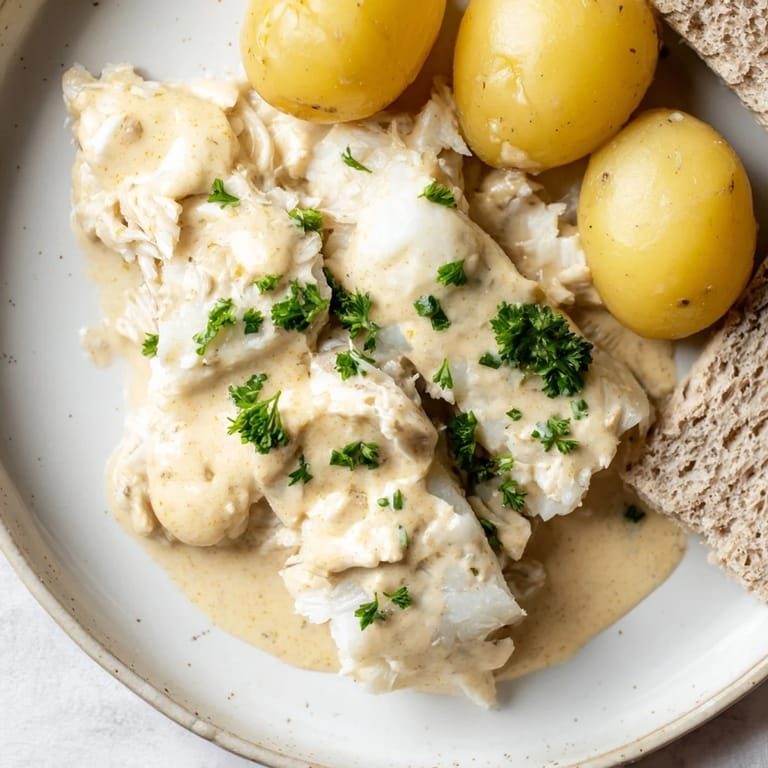
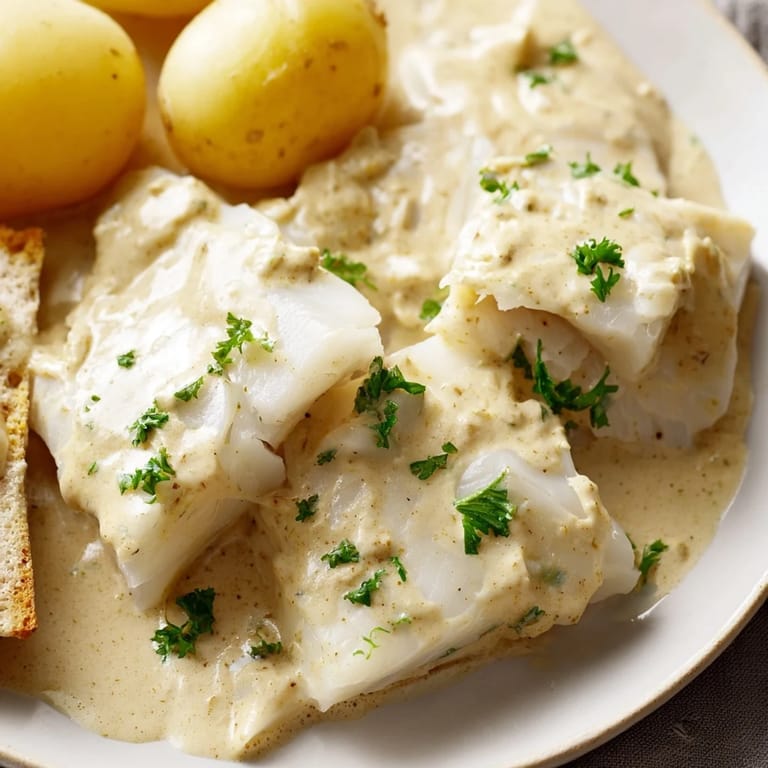
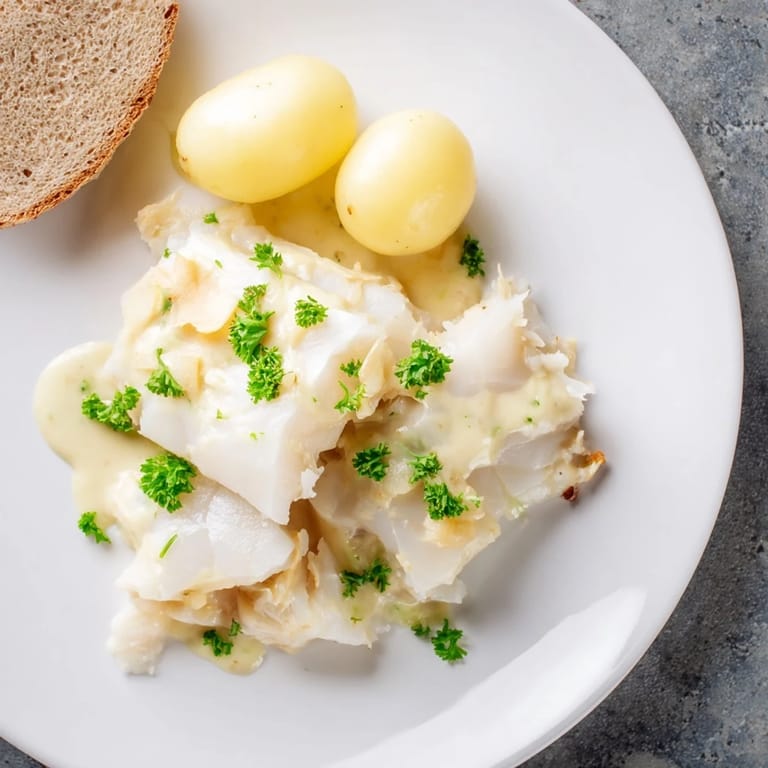
- Plate the hot fish with boiled potatoes and warm bread, then spoon the creamy mustard sauce generously over everything. A scatter of fresh parsley adds color and a fresh note, though it's not essential.
 Save
Save There's a moment when the fish comes out of the oven, steam rising from under the foil, and the kitchen fills with an aroma that's briny and gentle—nothing like the pungent smell of the soaking water. That transformation from something that seemed almost inedible to something truly delicious never stops feeling like a small miracle.
Why This Dish Matters
Lutefisk is more than food—it's a connection to centuries of Norwegian resourcefulness, to long winters and the ingenuity of preserving abundance for scarcity. The soaking, the salt treatment, the careful baking—each step is a conversation with history. Serving it with pride, even to people who've never heard of it, is a way of saying this matters, this story matters, and you're invited in.
Building the Perfect Sauce
The mustard sauce is where technique meets instinct—it's forgiving enough for beginners but rewarding enough for people who care about cooking. The key is whisking the milk in slowly and patiently; rushing it guarantees lumps, and lumpy sauce is disappointing in a way that's hard to recover from. Once the sauce thickens, the mustards go in, and suddenly everything tastes like something worth the effort.
Serving and Pairing
Lutefisk demands companions on the plate—potatoes for earthiness, bread for structure, mustard sauce for richness. In Norway, it's often served with green peas or bacon bits; I've also added roasted cauliflower with good results. The cold snap of aquavit alongside it, or a crisp pale lager, makes the whole meal feel ceremonial and warm at once.
- Serve everything hot—this dish loses its charm if any component cools down.
- If you can't find good dried cod, ask your fishmonger or a Scandinavian specialty shop; quality matters here.
- Leftovers can be gently reheated, though the fish is best eaten the same day you cook it.
 Save
Save Make this dish once and you'll understand why it's survived so long, why families gather around it every winter, why my grandmother treated that dried cod like treasure. It's honest food—nothing hidden, nothing pretentious, just patience and care transforming something simple into something unforgettable.
Common Questions
- → How long should dried cod soak before cooking?
The cod needs to soak in cold water for 5 to 6 days, changing the water daily to rehydrate and soften the fish properly.
- → What temperature is ideal for baking the lutefisk?
Preheat the oven to 200°C (390°F) and bake the fish covered with foil for about 25 to 30 minutes until it flakes easily.
- → How is the mustard sauce prepared?
The sauce is made by melting butter, whisking in flour, then gradually adding milk to thicken. Dijon and whole-grain mustard, sugar, salt, and pepper are blended in for flavor.
- → What sides complement the baked fish and sauce?
Boiled small potatoes and crispbread or flatbread are traditional accompaniments that balance the dish.
- → Can this dish accommodate gluten-free diets?
Yes, substituting regular flour with gluten-free flour in the sauce keeps the dish gluten-free.